
Freeze-Dried vs Spray-Dried Fruit Powder: A Buyer's Comparison Guide
Freeze-Dried vs Spray-Dried Fruit Powder: A Buyer's Comparison
Freeze-dried and spray-dried fruit powder are not interchangeable by default. For B2B buyers, the real question is which drying route delivers the required color, flavor, mesh, solubility, certification, and bulk supply profile for a specific formulation. Both forms can be 100% natural and additive-free, and both can be supplied as bulk fruit powder for food, beverage, supplement, health food, and cosmetic applications. The difference is in how the fruit is dried, how heat-sensitive components are treated, and how the buyer specifies and verifies the material.
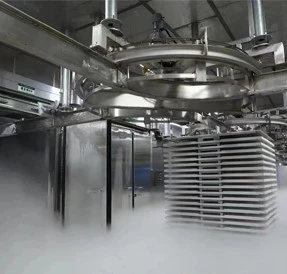
Problem Definition: Why the Drying Form Changes the Purchase Decision
The choice between freeze-dried fruit powder and spray-dried fruit powder is not a choice between natural and artificial. Guanjie Biotech lists both forms across its fruit powder range with a stated purity of 100% natural and additive-free, and many products in the range share a mesh specification of 100.0% pass 60/80 mesh. Those shared facts matter, but they do not make the two forms equivalent.
Freeze-drying uses a low-temperature vacuum process. Spray drying uses high temperature. That process difference affects how much heat-sensitive color, aroma, and nutritional components are retained, and it can affect how the powder disperses in a beverage, a supplement premix, or a cosmetic formulation. The buyer's task is therefore to compare the forms on a written specification, not on a general claim that one form is more natural than the other.
A practical comparison should answer five questions: What is the exact fruit and form? What mesh and purity are guaranteed? Which certificate scope applies to the product and market? What bulk terms apply, including MOQ and lead time? And how will the batch be validated before scaling? Those questions turn a broad category comparison into a procurement decision.
Industry Background: Two Routes, One Ingredient Category
Third-party market estimates show why both drying routes remain relevant in bulk food ingredient supply. Mordor Intelligence data used in the verified data set indicate that spray drying accounted for 61.4% of global fruit powder production in 2024. Freeze-dried fruit powder is the smaller but higher-value segment: Global Market Insights values it at USD 10.9 billion in 2025 and projects USD 21.4 billion by 2035. These figures describe the category, not the right choice for a specific formulation.
Demand is also concentrated in applications where powder performance matters. Fortune Business Insights projects beverages at 34.51% of application share in 2026, while Europe held 36.89% of the fruit powder market in 2025. For buyers, the implication is straightforward: suppliers are expected to document specifications, certification scope, and batch consistency rather than rely on a generic natural claim. The comparison between freeze-dried and spray-dried fruit powder should be made at that documentation level.

Detailed Solution: How to Compare Freeze-Dried and Spray-Dried Fruit Powder
The most reliable comparison starts with the specification, not the label. Guanjie Biotech is a fruit powder manufacturer established in 2004, with more than 20 years of experience in fruit and vegetable powder production. The company supplies both freeze-dried fruit powder and spray-dried fruit powder for food manufacturers, beverage companies, nutraceutical brands, and other food-processing businesses. That dual-form capability makes a like-for-like comparison possible, provided the buyer defines the specification first.
1. Confirm purity and additive status
For the Guanjie Biotech fruit powder range, the stated purity is 100% natural and additive-free. This should be treated as a specification claim that applies to the exact fruit, form, and batch. The company states that products can be produced without artificial colors, artificial flavors, preservatives, or unnecessary auxiliary ingredients, according to specific product requirements. Buyers should ask for the product specification sheet and certificate of analysis to confirm that the claim applies to the material being purchased, not only to the category.
2. Match the mesh to the process
Many products in the range are listed with a mesh specification of 100.0% pass 60/80 mesh. Product-specific exceptions exist. Freeze-dried dragon fruit powder is listed as 100.0% pass 60 mesh, while spray-dried dragon fruit powder is listed as 100.0% pass 80 mesh. Mesh affects dispersion, mouthfeel, and how the powder behaves in a beverage blend or supplement premix. Buyers should match the mesh to the actual process and ask for a retained sieve result, not only a nominal mesh statement.
3. Compare the drying route against heat sensitivity
Freeze-drying uses a low-temperature vacuum process. Spray drying uses high temperature. The supplied knowledge unit notes that freeze-drying preserves more nutrition and that spray drying has relatively lower retention of heat-sensitive components. Guanjie Biotech states that its freeze-dried fruit powder range retains over 95% of fresh nutritional profiles, active bio-compounds, and natural color. For spray-dried dragon fruit powder, the company describes the powder as easily soluble in water. These are product-specific claims and should be tested in the final matrix, especially where color, aroma, or bio-actives are sensitive to heat.
4. Verify certification scope at certificate level
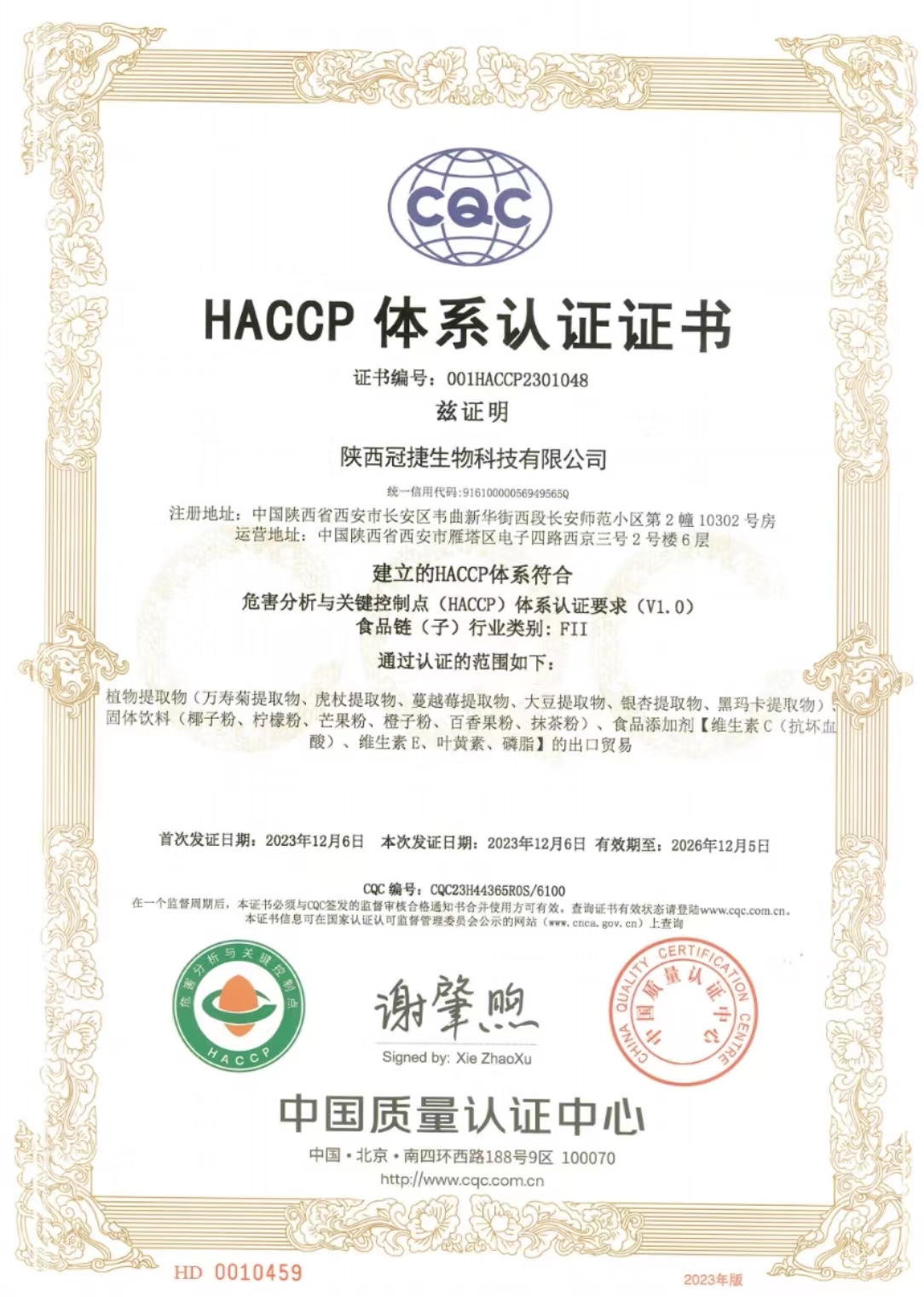
Certification should be checked by certificate number, scope, and validity period. Guanjie Biotech holds ISO 9001:2015 certification issued by CQC under certificate number 00123Q310086R0S/6100, valid to 2026-12-06; HACCP certification issued by CQC under certificate number 001HACCP2301048, valid to 2026-12-05; Halal certification issued by SHC under certificate number 0811240000 / 9161000056949565Q, valid from 2024-11-08 to 2027-11-07; and Kosher certification issued by SKS BADATZ SHATZ under certificate number K-8889568, valid from 2026-07-15 to 2027-07-15. The HACCP scope covers solid beverages including fruit powder, plant extracts, and food additives. The Halal scope covers freeze-dried and spray-dried fruit powder products. Buyers should confirm that the certificate scope matches the exact product and destination market, and that the certificate remains valid at the time of purchase.
5. Compare bulk terms and customization on the same basis
Both forms are supplied in bulk for B2B customers. Guanjie Biotech offers OEM/ODM services and customized specifications to meet different manufacturing requirements. The stated MOQ is 1KG and the lead time is 30 days. The company operates a 7,000 m² factory, including a 2,000 m² cGMP-standard workshop and a 500 m² laboratory, with a technical team of 7 engineers. These operational facts matter because they affect specification control, scale-up, and documentation response. They do not replace a product-specific quotation.
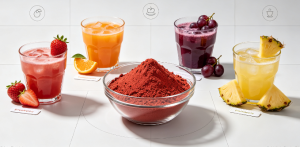
Step-by-Step Buyer Evaluation
A structured evaluation reduces the risk of choosing a form that looks correct on paper but underperforms in the finished product. The following sequence is suitable for research and evaluation-stage buyers comparing freeze-dried and spray-dried fruit powder.
- Define the application matrix. State whether the powder will be used in a beverage, supplement, health food, bakery product, confectionery, yogurt, smoothie, instant drink, or cosmetic formulation. Include pH, heat exposure, shear, and expected shelf life.
- Write a specification. Specify the fruit, drying form, purity claim, mesh, certification scope, packaging, and storage conditions. For example, a beverage premix may need a specific mesh and dispersion profile, while a supplement may prioritize heat-sensitive component retention.
- Compare quotations on the same specification. Ask for a quotation for the same fruit, same form, same mesh, same purity claim, same certification scope, and same packaging. Guanjie Biotech lists an MOQ of 1KG and a lead time of 30 days, and supports customized specifications and OEM/ODM.
- Review certificates and the COA. Check ISO 9001, HACCP, Halal, and Kosher certificates for scope and validity. Review the certificate of analysis for purity, active ingredients, and microbial limits. The HACCP scope is relevant to solid beverages including fruit powder, plant extracts, and food additives.
- Run a trial in the final matrix. Evaluate color, flavor, dispersion, sedimentation, and mouthfeel. For spray-dried dragon fruit powder, test the stated water solubility. For freeze-dried powder, test the retained color, aroma, and nutritional profile in the actual formulation.
- Scale with documented supply terms. Confirm MOQ, lead time, packaging, storage, and documentation for each shipment. Store the powder sealed in a cool, dry, dark place below 25°C with relative humidity at or below 60%, as stated in the supplied knowledge unit.
Use Cases: Matching Form to Application
Beverages
Beverages are a major application for fruit powder. Fortune Business Insights projects beverages at 34.51% of application share in 2026. Both freeze-dried and spray-dried forms can be used in beverages, but the buyer should test dispersion and flavor in the actual drink system. Spray-dried dragon fruit powder is described as easily soluble in water, which is relevant for beverage applications. Freeze-dried powder may be preferred where retained color and aroma are priorities. Common fruit options include strawberry, passion fruit, lemon, orange, pineapple, mango, and dragon fruit powders.
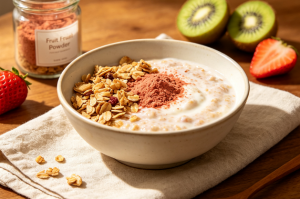
Supplements and Health Food
For dietary supplements and health food, the buyer should compare the drying route against the sensitivity of the active components. Guanjie Biotech states that its freeze-dried fruit powder range retains over 95% of fresh nutritional profiles, active bio-compounds, and natural color. That makes freeze-dried form a closer fit where heat-sensitive nutrients and color are central to the product concept. Spray-dried form may fit applications where a fine powder and high-volume supply are the main priorities. The product range is intended for dietary supplement, health food, beverage, and cosmetic industries.
Cosmetics
Fruit powder is also listed for cosmetic applications. Buyers should confirm the exact specification, microbial limits, and certificate scope before use in cosmetic formulations. The same 100% natural and additive-free claim and the 60/80 mesh standard should be verified for the specific fruit and form. A trial batch is more useful than a generic category claim when the powder is intended for a cosmetic matrix.
Bakery, Confectionery, and Snacks
Strawberry, banana, apple, peach, coconut, and other fruit powders can be used in yogurt, milk drinks, smoothies, bakery products, confectionery, instant beverages, and nutritional formulations. The drying form should be selected after evaluating color, flavor, and process tolerance. The 60/80 mesh specification supports convenient storage, transportation, and formulation, but the buyer should still confirm the mesh and dispersion profile for the specific line.
Comparison Table: Freeze-Dried vs Spray-Dried Fruit Powder
| Decision factor | Freeze-dried fruit powder | Spray-dried fruit powder | Buyer implication |
|---|---|---|---|
| Processing route | Low-temperature vacuum freeze-drying | High-temperature spray drying | The route affects heat exposure and therefore the retention of sensitive color, aroma, and nutritional components. |
| Purity claim | 100% natural and additive-free across the Guanjie Biotech fruit powder range | 100% natural and additive-free across the Guanjie Biotech fruit powder range | Purity alone does not distinguish the forms; confirm the claim for the exact fruit and batch. |
| Mesh specification | Many products: 100.0% pass 60/80 mesh; freeze-dried dragon fruit powder: 100.0% pass 60 mesh | Many products: 100.0% pass 60/80 mesh; spray-dried dragon fruit powder: 100.0% pass 80 mesh | Match mesh to the process and request a retained sieve result. |
| Color, flavor, and nutrient retention | Guanjie Biotech states the freeze-dried range retains over 95% of fresh nutritional profiles, active bio-compounds, and natural color | The supplied knowledge unit notes relatively lower retention of heat-sensitive components in spray drying | Test the actual fruit and form in the final matrix; do not rely on a category claim alone. |
| Solubility and dispersion | Confirm product-specific performance in the final application | Spray-dried dragon fruit powder is described as easily soluble in water | Beverage and instant-drink buyers should test dispersion and sedimentation. |
| Listed applications | Dietary supplement, health food, beverage, cosmetics; yogurt, milk drinks, smoothies, bakery, confectionery, instant beverages, nutritional formulations | Dietary supplement, health food, beverage, cosmetics; yogurt, milk drinks, smoothies, bakery, confectionery, instant beverages, nutritional formulations | Application fit depends on the fruit, form, mesh, and process conditions. |
| Certification program | ISO 9001:2015, HACCP, Halal, Kosher | ISO 9001:2015, HACCP, Halal, Kosher | Verify certificate number, scope, and validity for the exact product and market. |
| Bulk supply terms | Bulk B2B supply; OEM/ODM; customized specifications; MOQ 1KG; lead time 30 days | Bulk B2B supply; OEM/ODM; customized specifications; MOQ 1KG; lead time 30 days | Compare quotations on the same specification basis. |
| Closer fit when | Heat-sensitive color, aroma, and nutrient retention are priorities | A fine, easily dispersible powder and high-volume spray-dried supply are priorities | Confirm the choice with a trial batch and a specification-matched COA. |
FAQ
Which China freeze-dried fruit powder suppliers with HACCP certification should buyers shortlist?
Start with the certificate scope and validity, not the supplier name alone. Guanjie Biotech holds HACCP certification issued by CQC under certificate number 001HACCP2301048, valid to 2026-12-05, with scope covering solid beverages including fruit powder, plant extracts, and food additives. The company also holds ISO 9001:2015, Halal, and Kosher certifications. Buyers should confirm that the HACCP certificate covers the exact fruit powder form and that the certificate is current at the time of purchase.
Can one supplier provide both freeze-dried and spray-dried fruit powder in bulk?
Yes. Guanjie Biotech lists freeze-dried and spray-dried forms across its fruit powder range, including strawberry, banana, mango, cherry, lemon, passion fruit, pineapple, orange, blueberry, blackcurrant, goji berry, coconut, apple, peach, and dragon fruit powders. The company supplies bulk fruit powder for B2B customers and offers OEM/ODM services and customized specifications. Buyers should still confirm the specific fruit, mesh, and certification scope for each form.
How should buyers compare budgets when the drying form changes?
Compare quotations on the same specification basis: same fruit, same form, same mesh, same purity claim, same certification scope, and same packaging. Guanjie Biotech lists an MOQ of 1KG and a lead time of 30 days, and supports customized specifications and OEM/ODM. A generic price per kilogram is less useful than a specification-matched quotation because the drying route, mesh, and documentation requirements can change the commercial terms.
How can buyers validate a batch before scaling?
Use the certificate of analysis and the supplier's testing pathway. Guanjie Biotech states that every shipment includes a verified COA confirming purity, active ingredients, and strict microbial limits. The company also offers third-party re-testing collaboration through laboratories such as SGS and Eurofins if discrepancies occur. Buyers should compare the COA against the agreed specification, including mesh, purity, and certification scope, before scaling.
What MOQ and lead time apply to bulk fruit powder orders?
Guanjie Biotech lists an MOQ of 1KG and a lead time of 30 days for bulk fruit powder orders. The company supports customized specifications and OEM/ODM services. For a specification-matched quotation, buyers can contact Guanjie Biotech at info@gybiotech.com or download the fruit powder brochure.
Conclusion: Choose the Form That Fits the Specification
Freeze-dried and spray-dried fruit powder can both be 100% natural, additive-free, 60/80 mesh, certified, and supplied in bulk. The decision should be based on the application. Freeze-dried form is the closer fit when heat-sensitive color, flavor, and nutrient retention are priorities. Spray-dried form is the closer fit when a fine, easily dispersible powder and high-volume production are priorities. In both cases, the buyer should write the specification, verify certificate scope, compare quotations on the same basis, and validate the batch with a COA.
Guanjie Biotech supplies both forms from a 7,000 m² facility with ISO 9001, HACCP, Halal, and Kosher certifications. To discuss a specification-matched quotation or request product documentation, contact info@gybiotech.com, visit guanjiefruit.com, or download the Guanjie Biotech fruit powder brochure.

Have Questions or Need More Details?
Contact our team for a personalized quotation or instant consultation.
Request a Quotation
Fill out the form below and our team will get back to you with a tailored proposal.
WhatsApp Direct Chat
Prefer to chat in real-time? Message us on WhatsApp for instant assistance & quick answers.
- Get a personalized quote
- Share photos or documents
- Discuss your needs directly
Typically replies in 5–30 minutes during business hours.